



Beam
Your Leading Beam Supplier
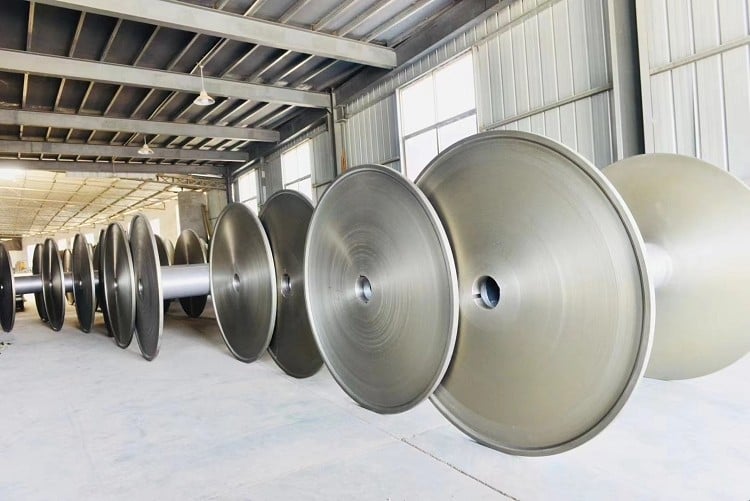
XIANGYING MACHINE MANUFACTURING CO., LTD (NEW POWER TECHNOLOGY CO., LTD ) is a private science-tech enterprise which is specialized in the development, production, sales, and service of high speed terry towel warp knitting machines, high speed tricot machines, warping machines, and spare parts. Our beam includes forged aluminum beam for warping knitting machine, casted aluminum beam for warping knitting machine, beam for warping machine, warping beam, warped warp beam. The warp beam is used in the process of preparing the warp for the weaving process. The warp yarns are wound onto the warp beam in a specific order and arrangement, known as the warp pattern or warp plan, which determines the design, pattern, and structure of the final woven fabric.
Why Choose Us?
Strong Strength
The company was founded in the year 2008 and covers an area of over 10000㎡ with advanced manufacturing technologies and powerful technical forces with precise processing equipment such as horizontal, vertical, and gantry processing centers.
Broad Market
We already have a strong overseas marketing team and have established long-term and loyal cooperation relationships with our customers in some countries where the textile business is developing rapidly like India, Turkey, South America, Egypt, Russia, Uzbekstan, etc.
Excellent Service
We not only provide one-year quality guarantee, but also provide you with the whole process of pre-sales and after-sales service. We try our best to provide the best cost performance to improve customer satisfaction.


Introduction to Beam
The warp beam, also known as the weaving beam or loom beam, serves as a large cylindrical roller that holds and stores the warp yarns. These warp yarns are wound onto the warp beam in a parallel and evenly tensioned manner, forming a tightly wound warp that serves as the foundation for the weaving process.
Specifications of Warp Beams
1. It is important that all threads are to be wound with equal tension. The tension should be maintained at a uniform level throughout the length and across the width of the warp sheet.
2. The surface of the warp on the beam should be cylindrical, uniform and smooth with no ridges or sunken part.
3. The threads near flanges are likely to sink inside the layers. The warp threads near flanges should not be caught in to the layers.
4. Many times it is observed that the selvedge threads are wound at a lesser tension and are loose. One has to make sure that these threads are wound at the same tension as that of the rest of the threads.
5. The hardness of the beam should be same throughout the width.
6. There should not be any marks of higher pressure value throughout the length of the yarn on beam.
7. The edges of the flanges are to be smoothly finished and should not cause any abrasion on the yarn during winding and unwinding. Also flanges should have clean surface and should not soil the yarn.
Functions of Beam
Yarn Storage and Management: The warp beam provides a means of storing and managing a large number of warp yarns in an organized and controlled manner. The parallel winding of the warp yarns onto the warp beam ensures that they are evenly tensioned and properly aligned, which is critical for achieving uniformity and quality in the woven fabric.
Tension Control: The warp beam helps to maintain proper tension on the warp yarns during the weaving process. The tension of the warp yarns on the warp beam is carefully controlled and adjusted to ensure that the yarns are neither too loose nor too tight. Proper tensioning is essential for preventing yarn breakage, maintaining fabric quality, and ensuring efficient weaving.
Warp Preparation: The warp beam is used in the process of preparing the warp for the weaving process. The warp yarns are wound onto the warp beam in a specific order and arrangement, known as the warp pattern or warp plan, which determines the design, pattern, and structure of the final woven fabric. The warp beam allows for precise control of the warp yarns' arrangement, ensuring that they are wound according to the desired pattern.
Efficient Weaving: The warp beam enables efficient weaving by providing a continuous supply of warp yarns to the loom during the weaving process. The warp yarns are unwound from the warp beam and threaded through the loom, where they are interlaced with the weft yarns to create the woven fabric. The properly wound and tensioned warp on the warp beam ensure smooth and uninterrupted weaving, minimizing downtime and maximizing productivity.
Fabric Quality Control: The warp beam plays a crucial role in maintaining the quality of the woven fabric. The precise winding and tensioning of the warp yarns on the warp beam ensure that the warp is evenly distributed and properly aligned, resulting in a fabric with consistent tension, selvage edges, and a uniform appearance. Proper tension control also helps to minimize yarn breakage, reduce defects, and improve fabric quality.
Warp Changeover: The warp beam allows for efficient warp changeover, which is the process of replacing the exhausted warp yarns with fresh ones for continued weaving. The worn-out warp yarns are unwound from the warp beam, and the new warp yarns are wound onto the empty warp beam, ready for the next weaving cycle. Efficient warp changeover is critical for minimizing downtime and maximizing loom efficiency.
Fabric Inspection and Repair: The warp beam also facilitates fabric inspection and repair during the weaving process. As the fabric is woven, it is wound onto the cloth beam, which is also known as the take-up beam. The fabric wound onto the cloth beam can be easily inspected for defects, such as broken warp yarns or weft floats, and repaired or corrected as needed. The warp beam helps to keep the fabric under proper tension during the inspection and repair process, ensuring that any issues are detected and addressed promptly.
Application Scope of Warp Beam
In the textile and weaving industries, warp beams are the primary carriers of warp yarns and the fundamental supply means for weaving operations. Each warp beam represents a large unit of warp yarns, which may contain dozens to hundreds of yarns. Textile and weaving factories use warp beams to fix and organize the warp yarns on the beam, which are then threaded through the heddles and reeds of looms to weave various fabrics.
In addition to single-weaving workshops, warp beams also play an essential role in multi-wave production lines. One warp beam may serve several looms at the same time, improving production efficiency. Meanwhile, automatic machines can replace manual operations, further accelerating the speed of beam replacement and yarn threading, thus meeting the requirements of high-volume production.
In the textile industry's research and development department, warp beams are used to develop and test new materials. For example, some high-tech textiles require a specific combination of warp and weft fibers, which need to be tested for different combinations of fiber textures, colors, and densities. By changing the warp yarns on the warp beam, researchers can quickly perform various experimental weaving to find new materials with market potential.
Some specialized textile companies offer personalized services to customers. Customers can choose the material, color, pattern, etc. of the fabric they need, which requires a change of warp yarn on the warp beam. This operation allows companies to meet the diverse needs of their customers and provide them with custom products.
Some museums or cultural centers need to repair and restore historical textiles, such as ancient tapestries or ceremonial banners. These textiles are usually made from high-quality natural fibers, such as silk or wool, which have specific historical and cultural values. To repair or restore these historical textiles requires the use of a warp beam to re-create the original pattern and color, thereby preserving these cultural relics.
Packing


Uniform and consistent starting tension and moderate size
The tension between warp yarns is uniform; the tension of each warp yarn is uniform from beginning to end; the size of the warping tension is moderate, the tension value The tension value is generally 0.09-0.13cN/dtex, which varies with the performance of the yarn.
Eliminating warp faults to improve yarn weaving performance
Such as hairy yarn detector, oiling the yarn to improve its gathering, smoothness, softness and anti-static properties, thus improving the weaving performance.
The same warp to use the same batch of yarns
Differences in tension, shrinkage and dyeing properties of different batches of filaments cause uneven warp surfaces, which can affect product quality.
Choose the appropriate warping speed
The same set of warp beams should be warped at the same speed and the warping speed should not be changed in the middle.
FAQ
As one of the most professional beam manufacturers and suppliers in China, we're featured by quality products and good price. Please rest assured to buy the best beam for sale here from our factory. Contact us for custom service.
Beam For Warping Machine, Forged Aluminum Beam For Warping Knitting Machine, Warping Beam